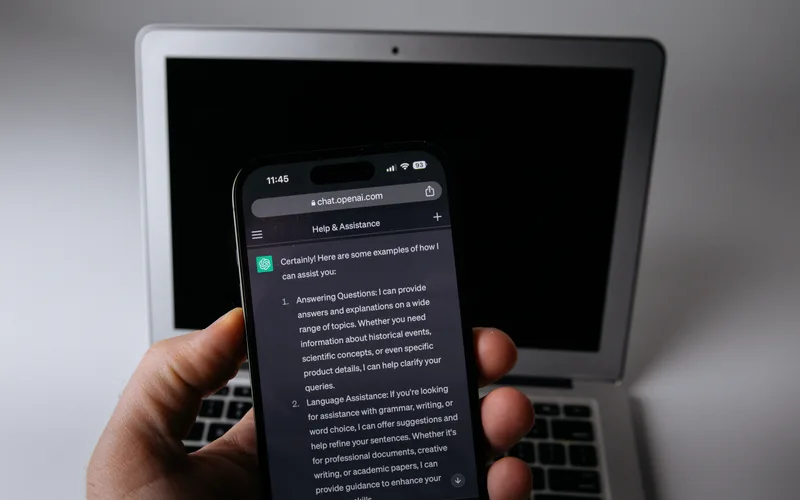

When OpenAI quietly dropped access to GPT-5 last week, researchers around the world scrambled to run their hardest benchmarks. The results were startling: not just incremental gains, but a qualitative leap in how the model approaches problems it has never seen before.
What's Actually New
GPT-5 introduces a "chain-of-thought by default" architecture, meaning it reasons step-by-step before committing to an answer — not as a special mode, but as its standard behaviour. Early testers on the MATH and GPQA benchmarks report accuracy improvements of 15–22 percentage points over GPT-4o.
"It caught an error in my proof that three senior researchers missed," wrote one Stanford mathematician on X. "I'm not sure how to feel about that."
Multimodal Reasoning
The vision capabilities have received equal attention. GPT-5 can now read a circuit diagram and explain exactly why a component will fail under load — a task that previously required highly specialised fine-tuning. Engineers at several semiconductor companies have already reported using early access builds for design review.
What It Means for the Industry
The release resets competitive expectations across the board. Google's Gemini Ultra team and Anthropic's Claude team both acknowledged GPT-5's performance in internal memos that have since circulated on social media. The race to the next capability frontier is firmly back on.
For developers, the API is available now on a tiered pricing model, with a significantly higher context window of 256K tokens — enough to ingest an entire codebase or a full legal document set in a single prompt.
Update: OpenAI has since shipped a tiered successor — read GPT-5.6: Sol, Terra, and Luna.
Later context: the GPT-5 rollout backlash and what it cost OpenAI.