
The biggest land grab in technology right now is not for users or app-store slots — it is for compute. And in mid-2026, the contest took a striking turn: Meta, long a consumer-software company, is reported to be building a cloud business to sell access to its AI computing power, stepping directly onto turf ruled by Amazon, Microsoft, and Google.
What is happening
According to reporting from Bloomberg, Meta is developing plans to offer external customers access to its AI infrastructure and models — effectively renting out compute it has built for its own needs. If it proceeds, Meta would join the small club of hyperscalers selling AI capacity, and would monetize one of the most expensive asset bases in the industry rather than treating it purely as a cost center.
It fits a broader 2026 pattern of enormous infrastructure commitments:
- SoftBank announced plans for a multi-gigawatt AI data center in France, with reported investment on the order of tens of billions of dollars.
- Microsoft brought major new campus capacity online, including a multibillion-dollar facility in Wisconsin.
- Power deals have become strategic: long-term agreements to secure dedicated electricity for data-center campuses are now part of the competitive playbook.
The twist: repatriation
Even as hyperscalers expand, a countercurrent is real. A meaningful share of enterprises report moving some workloads back from public cloud to on-premises or private infrastructure, chasing cost predictability and control. The lesson is not "cloud is over" — it is that the market is maturing into a hybrid reality where the smartest buyers place each workload where it runs best and cheapest.
Background: why compute became the prize
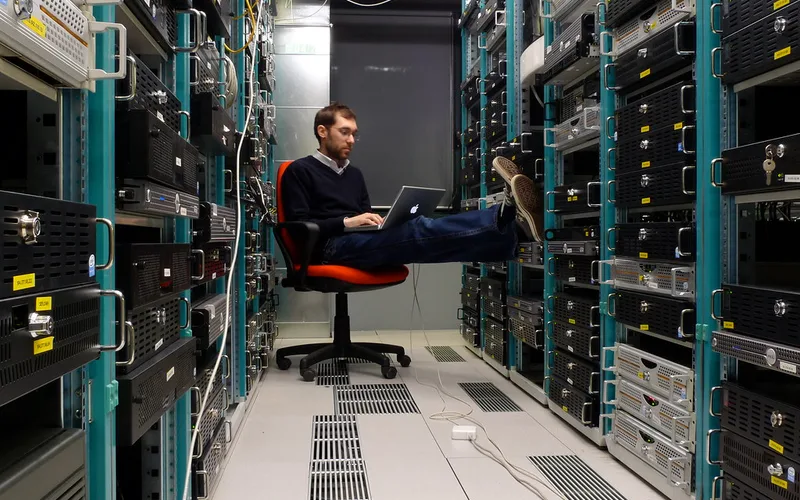
Modern AI turned computing into a scarce, strategic resource. Training and serving large models demands dense clusters of accelerators, vast power, and specialized cooling — the kind of capacity documented in our look at why AI needs so much power. Whoever controls that capacity controls a chokepoint of the entire industry, which is exactly why every large player is racing to own more of it.
The falling price of models only sharpens the fight. As we noted in the 2026 AI price war, cheaper tokens mean more usage — and more usage means still more demand for the very infrastructure these companies are scrambling to build.
Why it matters
Control of compute shapes who can build frontier AI, who profits from it, and how resilient the whole system is. Meta's potential entry would add competition, which tends to help buyers on price. But the scale of spending also concentrates power — and strains real-world limits on electricity, water, and land. The winners of the compute race will influence the AI industry as much as any single model.
Key takeaways
- Meta is reported to be building a cloud business to sell AI compute, challenging AWS, Azure, and Google Cloud.
- 2026 has seen massive data-center and power commitments from SoftBank, Microsoft, and others.
- A real repatriation trend shows enterprises moving some workloads back on-premises for cost and control.
- Compute is the strategic chokepoint of the AI era, which is why every major player is racing to own it.
- More competition may help buyers, but the scale raises genuine power, water, and land constraints.
The bottom line
The AI story is increasingly a story about infrastructure. Meta selling compute would be one more sign that the ground under AI — data centers, power, and chips — is where the next phase of competition is really being fought.
Related: the AMD-Anthropic gigawatt deal.
Follow the money: who profits from the AI boom.