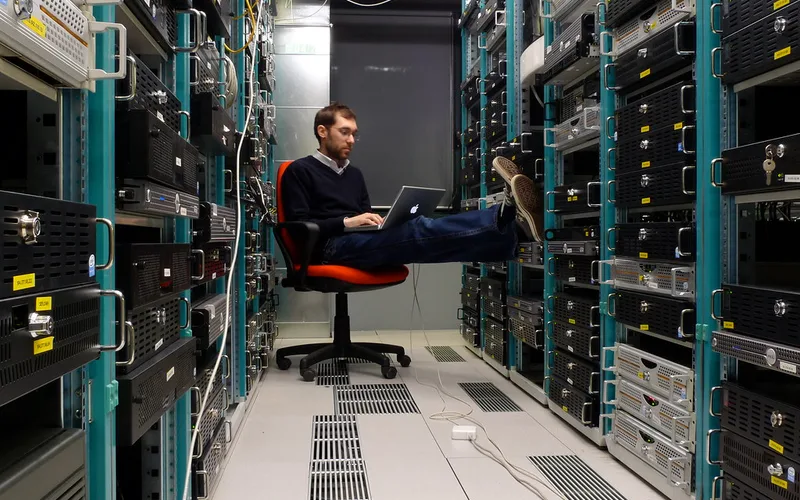

Every AI answer you receive has a physical cost. Behind the chat window sits a building full of specialized computers drawing enormous amounts of electricity. As AI use has exploded, so has attention to the data centers that power it — and to the strain they place on electrical grids. This guide explains, in plain terms, why AI is so power-hungry and what that means.
Start with the basics: what a data center is
A data center is a purpose-built facility that houses servers — the computers that run software for other people. When you use almost any online service, you are really using someone's data center. AI data centers are a specialized, denser breed: packed with graphics processors (GPUs) and AI accelerators designed to do the massive parallel math that neural networks require.
Why AI specifically eats so much power
Two activities dominate AI's energy bill:
- Training: teaching a model is a one-time-but-huge effort, running thousands of accelerators flat-out for weeks. It is enormously energy-intensive.
- Inference: actually using a model to answer prompts. Any single query is cheap, but at billions of queries a day, inference becomes the larger, ongoing draw.
The chips themselves are the root cause. A modern AI accelerator can draw many times the power of a traditional server processor, and AI facilities pack them together as densely as possible. That density creates a second problem: heat.
The hidden cost: cooling
Densely packed chips generate intense heat, and hot chips fail. So a large share of a data center's energy goes not to computing at all, but to cooling — air handling, and increasingly liquid cooling piped directly to the chips. Efficiency is measured by a metric called PUE (power usage effectiveness): the ratio of total facility energy to the energy actually reaching the computers. A PUE close to 1.0 is excellent; anything much higher means a lot of energy is spent just keeping things cool.
Why it became a headline issue
AI's appetite collided with the real world. Utilities in several regions now cite data centers as a leading driver of new electricity demand, and the biggest operators are signing long-term power deals — even exploring dedicated generation — to guarantee supply. This is the physical backdrop to the compute land grab reshaping the cloud industry. Water use for cooling and pressure on local grids have made data centers a genuine public-policy topic, not just an engineering one.
What is being done about it
The industry is not standing still. The main levers are:
- More efficient chips that deliver more computation per watt each generation.
- Liquid cooling that removes heat far more efficiently than air.
- Cleaner power through renewable purchases and, increasingly, nuclear agreements.
- Smarter software — including the cost-and-energy-saving practice of routing tasks to the smallest capable model, a theme running through the 2026 model price war.
Key takeaways
- AI runs in data centers packed with power-hungry GPUs and AI accelerators.
- Training is a huge one-time energy cost; inference is smaller per query but dominant at scale.
- A large share of energy goes to cooling, measured by the PUE efficiency metric.
- AI demand is now a leading driver of new electricity needs, making data centers a public-policy issue.
- Efficiency gains, liquid cooling, cleaner power, and smarter model routing are the main responses.
The bottom line
AI feels weightless, but it runs on some of the most energy-intensive infrastructure ever built. Understanding data centers — what they do and why they draw so much power — is essential to understanding both the promise and the real-world limits of the AI boom.
Go deeper: why data centres are switching from air to water.